Body Measurements Chart: Find Your Ideal Body Proportions
A body measurements chart gives you a quick reference for comparing your bust, waist, and hip measurements with clothing sizes in the US, UK, and EU. This guide explains how to measure yourself correctly, understand women’s and men’s size charts, and see how your measurements relate to overall body proportions.
Find Your Body Shape
Enter your bust, waist, and hip measurements to discover your body shape and understand your natural proportions.
Free to use. No sign-up required.
How to Take Your Body Measurements
Before using a body measurements chart, take each measurement carefully so you have accurate numbers to compare.
Bust / Chest
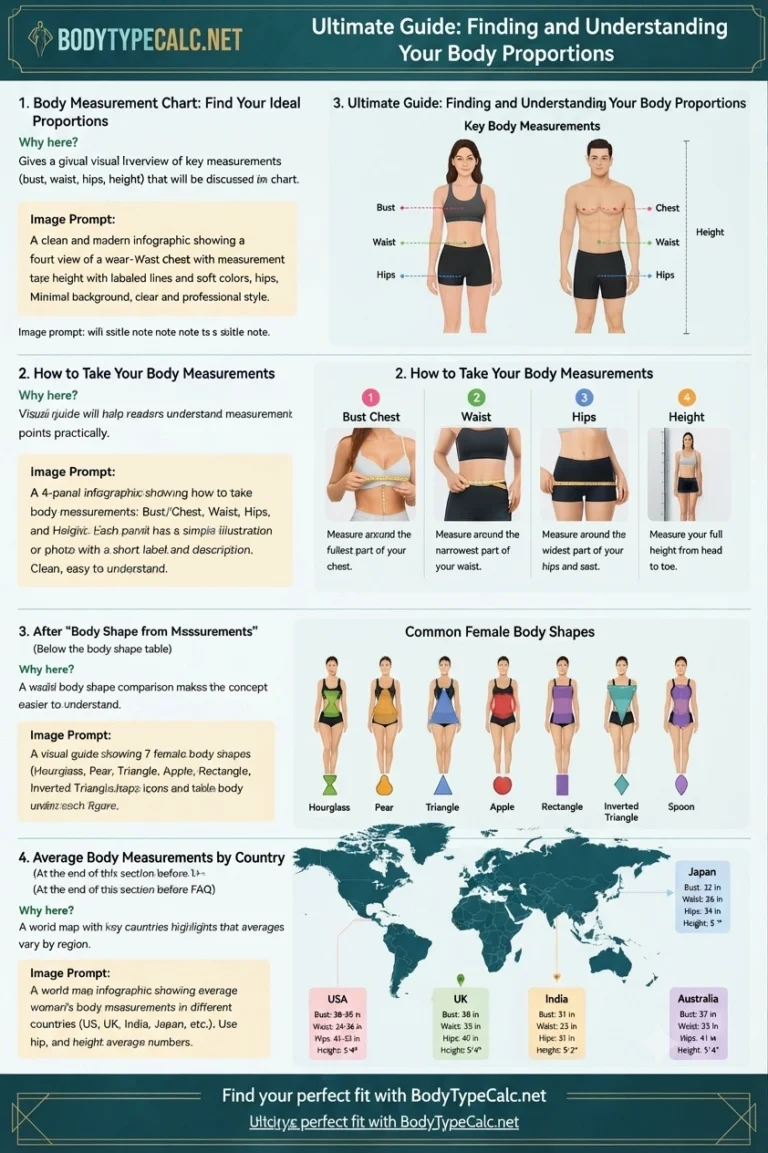
Wrap a soft measuring tape around the fullest part of your chest, usually across the nipple line. Women should measure in a non-padded bra or without a bra. Keep the tape level all the way around your body.
Waist
Bend slightly to one side to find the crease that marks your natural waist, usually one to two inches above the belly button. Wrap the tape around this narrowest point and breathe normally without pulling your stomach in.
Hips
Stand with your feet together and find the widest part of your hips and seat. Wrap the tape around this point, keeping it level all the way around. Avoid standing with your feet apart, as this can affect the measurement.
Height
Stand barefoot against a wall with your heels and back straight. Place a flat book on top of your head, keeping it level with the wall, and mark the spot. Measure from the floor to the mark. Height can be useful for dress length, trouser length, and some clothing size references.
Women’s Body Measurements Chart (US, UK, EU Sizes)
The chart below provides a general reference for comparing bust, waist, and hip measurements across US, UK, and EU women’s clothing sizes. Sizing can vary between brands and styles, so always check the brand’s own size chart before ordering.
| US Size | UK Size | EU Size | Bust (in) | Waist (in) | Hips (in) |
| XS / 0 | 6 | 32 | 31 to 32 | 23 to 24 | 33 to 34 |
| XS / 2 | 8 | 34 | 33 to 34 | 25 to 26 | 35 to 36 |
| S / 4 | 10 | 36 | 35 to 36 | 27 to 28 | 37 to 38 |
| S / 6 | 12 | 38 | 37 to 38 | 29 to 30 | 39 to 40 |
| M / 8 | 14 | 40 | 39 to 40 | 31 to 32 | 41 to 42 |
| M / 10 | 16 | 42 | 41 to 42 | 33 to 34 | 43 to 44 |
| L / 12 | 18 | 44 | 43 to 44 | 35 to 36 | 45 to 46 |
| L / 14 | 20 | 46 | 45 to 46 | 37 to 38 | 47 to 48 |
| XL / 16 | 22 | 48 | 47 to 48 | 39 to 40 | 49 to 50 |
| 1X / 18 | 24 | 50 | 49 to 50 | 41 to 43 | 51 to 53 |
| 2X / 20 | 26 | 52 | 51 to 53 | 44 to 46 | 54 to 56 |
| 3X / 22 | 28 | 54 | 54 to 56 | 47 to 49 | 57 to 59 |
If your bust, waist, and hip measurements fall into different size ranges, choose the size that accommodates your largest measurement. For a better fit, the garment can often be altered or you can choose a style with some stretch.
Men’s Body Measurements Chart (Shirt and Trouser Sizes)
This chart provides a general reference for comparing chest, waist, and hip measurements with standard men’s clothing sizes. Men’s sizing can vary by brand and garment style, so check the specific brand’s size chart before choosing a size.
If your measurements fall between two sizes, choose the size that fits your largest measurement, then consider tailoring or a more flexible garment for a better fit.
| Size | Chest (in) | Waist (in) | Hips (in) |
| XS | 32 to 34 | 26 to 28 | 33 to 35 |
| S | 35 to 37 | 29 to 31 | 36 to 38 |
| M | 38 to 40 | 32 to 34 | 39 to 41 |
| L | 41 to 43 | 35 to 37 | 42 to 44 |
| XL | 44 to 46 | 38 to 40 | 45 to 47 |
| 2XL | 47 to 49 | 41 to 43 | 48 to 50 |
| 3XL | 50 to 52 | 44 to 46 | 51 to 53 |
Body Shape from Measurements
Your bust, waist, and hip numbers don’t just point to a size; they also translate into a general body shape category. Here’s how the proportions break down.
| Body Shape | Bust vs Hips | Waist | Example |
| Hourglass | Within 5 to 12% of each other | At least 25% smaller than both | 36-24-36 |
| Pear | Hips 5 to 15% wider | Clearly defined | 34-27-39 |
| Triangle | Hips 15%+ wider | Defined or soft | 34-28-40 |
| Apple | Bust and hips similar | 90%+ of bust measurement | 38-36-39 |
| Rectangle | Within 5% of each other | Less than 25% smaller | 36-30-37 |
| Inverted Triangle | Bust 5%+ wider than hips | Any | 40-32-36 |
| Spoon | Hips wider, with a high hip shelf | High hip 15%+ wider than waist | 34-27-40 (high hip 35) |
For an exact result based on your own numbers, a body shape calculator runs these same proportions automatically.
Average Body Measurements by Country
These figures are general reference averages for adults, not fixed standards. Individual measurements can vary widely based on age, height, and body composition.
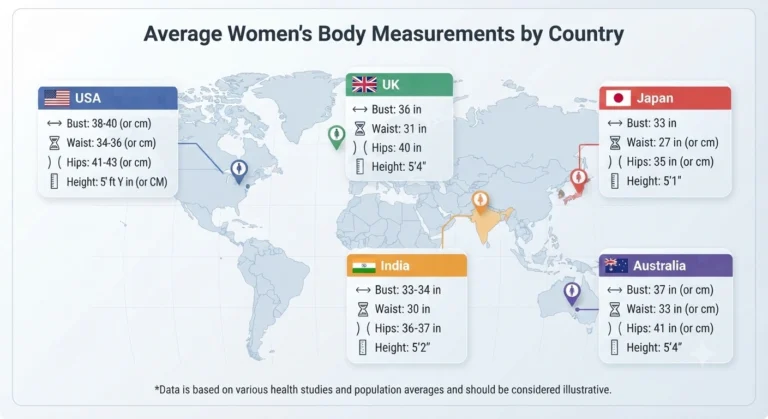
Average Women’s Measurements in the US
Average Women’s Measurements in the UK
Average Men’s Measurements in the US
Ideal Proportions Reference
These are commonly discussed proportion references, not universal standards:
For personal sizing or body shape, your own measurements are more useful than comparing yourself with population averages.
Frequently Asked Questions
Conclusion
A body measurements chart is only as useful as the measurements you compare against it, so take your bust, waist, hips, and height carefully before checking any size guide. Once you have accurate numbers, use them with a Body Shape Calculator, Dress Size Calculator, Waist to Hip Ratio Calculator, or Body Measurement Calculator for a more personalized result.
For step-by-step measuring instructions, you can also check our guides on how to measure your waist, hips, bust, and shoulders.