
Dress Size Calculator for Women: Find the Right Fit by Measurements
Finding the right dress size doesn’t have to be guesswork. A dress size calculator uses your bust, waist, and hip measurements to estimate your clothing size based on standard sizing charts. This guide explains how to measure yourself correctly, compare international size charts, and avoid common sizing mistakes.
Whether you’re shopping online or choosing a dress for a special occasion, accurate measurements can save time, reduce returns, and help you find a better fit. Knowing your body measurements also makes it easier to compare sizes across different brands, since clothing sizes can vary from one manufacturer to another.
What Size Dress Am I?
Enter your measurements to estimate your dress size instantly.
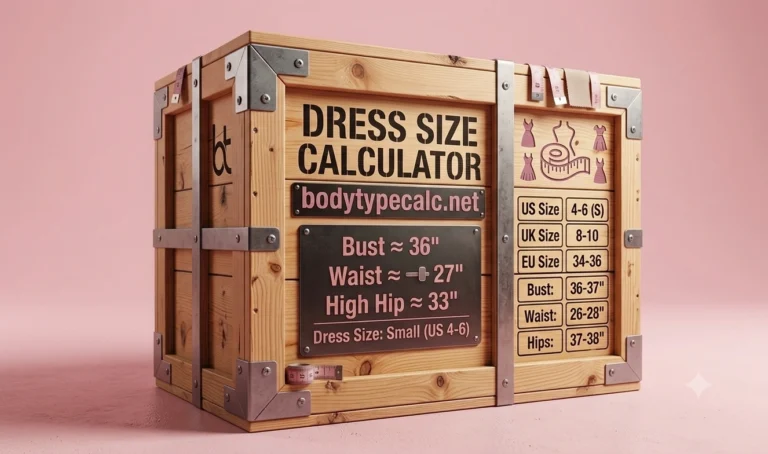
What Is a Dress Size Calculator?
A dress size calculator uses your body measurements to estimate your clothing size, making it easier to find the right fit before you shop.
What the calculator does
A dress size calculator compares your bust, waist, and hip measurements with standard sizing charts to estimate your closest dress size. It removes the guesswork of trying to match a size label to your actual body.
Who should use it?
Anyone shopping for dresses, especially online, can benefit from using a dress size calculator. It’s useful for everyday dresses, wedding dresses, prom dresses, and plus-size shopping alike.
Why dress sizes vary between brands
There isn’t a universal dress sizing standard. Every brand sets its own chart, so a size 10 at one store might fit like a size 12 or a size 8 somewhere else.
How body measurements improve accuracy
Using your actual bust, waist, and hip measurements provides a much more reliable size estimate than relying on the size you usually wear. Your body measurements stay the same, even when clothing sizes vary between brands.
How to Use the Dress Size Calculator
Using the dress size calculator is quick and easy.
What Measurements Do You Need?
Bust Measurement
Your bust measurement is taken around the fullest part of your bust. It’s one of the three main measurements used to estimate your dress size.
Waist Measurement
Your waist measurement is taken at the narrowest part of your torso, usually just above your belly button.
Hip Measurement
Your hip measurement is taken around the fullest part of your hips and seat.
How to Measure Yourself for a Dress
How to Measure Your Bust
Stand naturally and wrap the tape around the fullest part of your bust, keeping the tape level all the way around. A well-fitted bra, or none at all, gives the most accurate reading.
How to Measure Your Waist
Find the narrowest part of your torso, usually about an inch above your belly button. Breathe normally and avoid pulling your stomach in.
How to Measure Your Hips
Wrap the tape around the fullest part of your hips and seat, keeping the tape level and your feet together.
Women’s Dress Size Chart
US Dress Size Chart
| US Size | Bust | Waist | Hips |
| 0 | 32 | 24 | 34 |
| 2 | 33 | 25 | 35 |
| 4 | 34 | 26 | 36 |
| 6 | 35 | 27 | 37 |
| 8 | 36 | 28 | 38 |
| 10 | 37 | 29 | 39 |
| 12 | 38.5 | 30.5 | 40.5 |
| 14 | 40 | 32 | 42 |
| 16 | 41.5 | 33.5 | 43.5 |
| 18 | 43.5 | 35.5 | 45.5 |
| 20 | 45.5 | 37.5 | 47.5 |
| 22 | 47.5 | 39.5 | 49.5 |
| 24 | 49.5 | 41.5 | 51.5 |
UK Dress Size Chart
UK dress sizes are generally four sizes higher than US sizes. For example, a US 8 is approximately a UK 12, while a US 12 is approximately a UK 16.
EU Dress Size Chart
EU dress sizes are generally about 32 sizes higher than US sizes. For example, a US 8 is approximately an EU 40, while a US 12 is approximately an EU 44.
International Size Conversion Chart
| US | UK | EU |
| 0 | 4 | 32 |
| 4 | 8 | 36 |
| 8 | 12 | 40 |
| 12 | 16 | 44 |
| 16 | 20 | 48 |
| 20 | 24 | 52 |
| 24 | 28 | 56 |
Dress Size Conversion Chart
US to UK
As a general guide, add 4 to your US dress size to estimate the equivalent UK size. A US 6 is close to a UK 10.
US to EU
As a general guide, add 32 to your US dress size to estimate the equivalent EU size. A US 6 is close to an EU 38.
US to International (XS to XXL)
| US Size | Letter Size |
| 0 to 2 | XS |
| 4 to 6 | S |
| 8 to 10 | M |
| 12 to 14 | L |
| 16 to 18 | XL |
| 20 to 24 | XXL |
Why Dress Sizes Vary Between Brands
A clothing size label doesn’t always mean the same fit because every brand uses its own sizing standards.
Vanity sizing
Some brands use smaller size labels than the actual garment measurements, a practice known as vanity sizing.
Brand-specific sizing
Each brand creates its own size chart, so the same size label can fit differently from one brand to another.
Fabric and fit differences
Stretch fabrics usually provide a more flexible fit than structured fabrics, even when the size label is the same.
Designer vs standard sizing
Designer, bridal, and formalwear brands often fit differently from everyday clothing brands, making size labels less consistent.
How to Choose the Right Dress Size
Choosing the right dress size is about more than the size label. These tips can help you find a better fit.
Use your largest measurement
If your bust, waist, and hips match different sizes, choose the size that fits your largest measurement and tailor the rest if needed.
Check each brand’s size chart
Don’t assume your usual size will fit every brand. Always check the exact chart on the site you’re buying from.
Consider fabric stretch
Stretch fabrics offer a more flexible fit than structured fabrics, which can be helpful if you’re between sizes.
Read fit descriptions
Descriptions such as fitted, relaxed, or true to size can help you understand how a dress is designed to fit.
Size up or tailor if needed
If you’re between sizes, choosing the larger size is usually easier than trying to make a smaller size fit.
Dress Size and Body Shape
Your body shape affects how a dress fits and feels, even if the size is correct. Choosing the right dress style can create a more balanced look. Use a Body Shape Calculator to identify your natural proportions and find styles that work better for your figure.
How body shape affects dress fit
The same dress size can fit differently depending on your body shape, which is why both your measurements and proportions matter.
Best dress styles for each shape
Choosing a dress style that suits your body shape often makes a bigger difference than focusing on the size label alone.
Common Dress Size Mistakes
Tips for a Better Dress Fit
Dress Size vs Clothing Size
| Dress Size | Clothing Size |
| Based on body measurements | General sizing |
| Better for dresses | Used for different clothing types |
| Varies by brand | Also varies by brand |
Frequently Asked Questions
Conclusion
A dress size calculator helps you choose the right size with more confidence, especially when shopping online. Measure your bust, waist, and hips carefully, compare them with the brand’s size chart, and consider your body shape for the best fit. Accurate measurements and the right size guide make it much easier to find dresses that fit comfortably and look great.