Rectangle Body Shape: Measurements, Style Tips & How to Dress Your Figure
The rectangle is one of the most common body shapes, yet it’s often misunderstood. A straighter silhouette doesn’t limit your style options. It simply gives you more flexibility in how you choose to dress.
Here’s what the shape actually is, how to check your own numbers, and what genuinely helps once you’re standing in front of your closet deciding whether you want to embrace its clean lines or create more definition through styling.
Rectangle Body Shape
Your bust, waist, and hips have similar measurements, creating a straight and balanced silhouette. The waist is less defined, giving the body an even appearance.
Also known as: Straight body shape, banana body shape, ruler body shape.
What Is a Rectangle Body Shape?
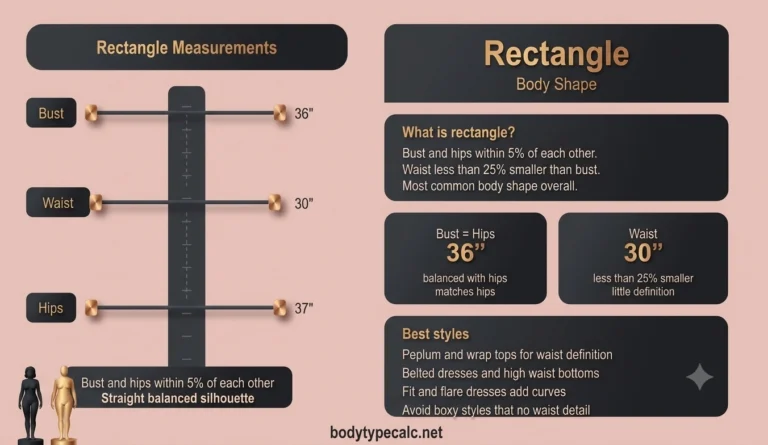
A rectangle figure, sometimes called a straight or banana shape, has bust, waist, and hip measurements that are fairly balanced. The waist is slightly smaller than the bust and hips, but it doesn’t have the dramatic curve you’d see in an hourglass.
The key feature here is balance. No single area of the body stands out more than another. A woman with measurements of 34-28-35 and another with 40-34-41 can both have a rectangle shape because their proportions follow the same pattern even though the actual numbers differ.
Body shape isn’t determined by clothing size or weight. It’s based on how your bust, waist, and hip measurements compare with one another.
Rectangle Body Shape Measurements
Most women with a rectangle figure follow a similar pattern:
The rectangle sits closer to the soft hourglass and apple than any other shape, so small measurement differences can genuinely move you across a line. That’s normal here in a way it isn’t for the other shapes.
At a glance
| Measurement | Typical range |
| Bust vs hips | Within about 3.6 inches of each other |
| Bust vs waist | Usually under 9 inches |
| Hips vs waist | Usually under 10 inches |
| Waist-to-hip ratio | Around 0.75–0.80 |
These are general guidelines, not strict rules. If your measurements fall between two body shapes, that’s completely normal.
Types of Rectangle Body Shape
Not every rectangle figure looks exactly the same. Most women fall into one of three variations.
Classic Rectangle
A classic rectangle has balanced bust and hips with a softly, rather than sharply, defined waist, giving an even, straight silhouette from top to bottom.
Athletic Rectangle
An athletic rectangle keeps the same balanced proportions but has more visible muscle tone through the shoulders, back, or core. The silhouette stays straight but appears more toned than soft.
Slender Rectangle
A slender rectangle is a leaner version of the same pattern, with a longer, straighter silhouette often associated with runway and editorial fashion.
All three share the same basic proportions. The difference is really just where muscle and body fat happen to sit.
Check Your Rectangle Body Shape Proportions
Enter your bust, waist, and hip measurements to see whether your proportions match a rectangle (straight) body shape.
Why Your Measurements Matter
Knowing your body shape isn’t about changing your body. It’s about understanding your natural proportions so you can choose clothes that fit better and feel more comfortable.
Once you know your measurements, shopping gets easier because you’ll understand which styles complement your proportions instead of relying only on the size on the tag.
How to Measure for a Rectangle Body Shape
Rectangle results are more sensitive to small measuring errors than most, precisely because the differences that define them are subtle to begin with. Use a soft measuring tape, stand naturally, and measure twice if you can.
Bust
The fullest part, tape kept level all the way around.
Waist
The narrowest point, after a normal exhale. If it isn’t obvious, which is common with this shape, pick a repeatable spot, about an inch above the belly button, rather than guessing a different point each time.
Hips
The fullest part of your hips and seat, feet together.
If your bust, waist, and hips all come out close in size, you likely have a rectangle body shape.
Rectangle Compared to Other Shapes
Compare the rectangle body shape with other body types to better understand its balanced proportions and identify your natural shape.
Why Clothes Sometimes Look Boxy
Rectangle body shapes usually fit standard clothing well because the bust, waist, and hips are balanced.
The main challenge is that loose or oversized clothing can hide your natural proportions and create a boxier silhouette. Adding a belt, tucking in your top, or choosing more structured pieces helps create definition.
How to Dress a Rectangle Body Shape
The goal is simple. Work with your natural proportions instead of trying to create a completely different silhouette. Use our Dress Size Calculator to find a better-fitting size based on your measurements.
Tops
Wrap tops and peplum tops both add waist definition through the garment itself. Fitted T-shirts and V-neck tops keep things simple and streamlined. Button-down shirts work either way, tucked for more shape, untucked for a cleaner line.
Dresses
Wrap dresses and belted dresses build in a waist cue you don’t have to create yourself. Fit and flare does something similar through the cut. A-line dresses keep things clean and easy without demanding much waist definition at all.
Jeans
High-waisted straight-leg, bootcut, and wide-leg jeans all work well because they create clean lines without relying on a dramatic waist-to-hip difference.
Bottoms
A-line skirts and pencil skirts both work, one adding movement, the other a cleaner line. Tailored trousers and wide-leg pants round out either direction depending on the mood.
Outerwear
Belted coats and wrap coats add a waist cue instantly. Tailored blazers and structured jackets keep things sharp without needing one at all.
By occasion
For work, a belted blazer with tailored trousers or a pencil skirt reads polished either way. For something casual, high-waisted jeans with a tucked-in tee or a wrap top both work effortlessly. For formal occasions, wrap dresses, fit-and-flare dresses, and belted gowns all add waist definition while keeping your proportions balanced. See our Rectangle Body Shape Outfits guide for more ideas.
Waist-to-Hip Ratio for a Rectangle Figure
The waist-to-hip ratio (WHR) is calculated by dividing your waist measurement by your hip measurement. For many women with a rectangle body shape, the WHR usually falls between 0.75 and 0.80.
WHR can help you understand your proportions, but it doesn’t determine your body shape on its own. A rectangle figure is identified by balanced bust, waist, and hip measurements rather than WHR alone.
Can a Rectangle Body Shape Change?
Yes. Your body shape can change over time due to:
While your bone structure stays the same, changes in muscle and body fat can slightly affect your body proportions.
Is the Rectangle Body Shape the Most Common?
Yes. The rectangle figure is generally considered the most common female body shape. Studies estimate that around 40–46% of women fall into this category.
Frequently Asked Questions
Conclusion
A rectangle body shape is defined by balanced proportions rather than dramatic curves. Understanding your measurements makes it easier to choose clothes that fit well and suit your natural shape.
Whether you prefer clean, structured outfits or styles that add more waist definition, the best approach is to wear clothing that fits well, works with your natural proportions, and makes you feel comfortable and confident.