Hourglass Body Shape: Measurements, Style Tips & How to Dress Your Figure
The hourglass body shape is known for its balanced proportions and naturally defined waist. This guide explains how to identify an hourglass figure, understand its variations, and choose clothing that complements your shape.
Hourglass Body Shape
Your bust and hips are nearly equal in size, while your waist is noticeably smaller. This balanced proportion creates the classic hourglass silhouette.
Tip: Enter your measurements in the calculator to see if your body shape matches the hourglass figure.
What Is an Hourglass Body Shape?
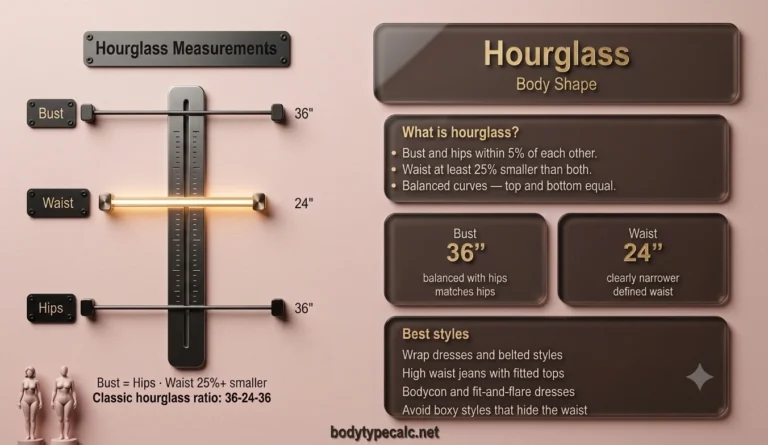
An hourglass figure is defined by balanced bust and hip measurements with a clearly defined waist. The key is body proportions, not body size.
For example, someone with measurements of 32–24–32 and another with 42–32–42 can both have an hourglass figure because the proportions are similar.
Many people assume they have an hourglass figure because they have curves. In reality, body shape is determined by measurement ratios, not by weight, height, or dress size.
Typical Hourglass Measurements
Most hourglass figures share these proportions:
If your waist is around 7–9 inches smaller instead of 9 inches or more, you may have a soft hourglass body shape. It follows the same overall proportion but with gentler curves.
An hourglass figure is based on proportions, not clothing size. Petite, tall, slim, athletic, and plus-size women can all naturally have this body shape.
Hourglass Body Shape Measurements at a Glance
| Measurement | Typical Hourglass Range |
| Bust vs Hips | Within 1–3.5 inches of each other |
| Waist Difference | At least 9 inches smaller than bust and hips |
| Waist-to-Hip Ratio | Around 0.65–0.75 |
These ranges are general guidelines, not strict rules. If your measurements are close to another body shape, it’s normal to fall between two categories.
Top vs. Bottom Hourglass
Even within a textbook result, one end is often a touch ahead of the other.
Neither variation is better than the other. The difference simply depends on whether the bust or hips are slightly more prominent.
Check Your Hourglass Body Shape Proportions
Enter your bust, waist, and hip measurements to see whether your proportions match an hourglass body shape.
How to Measure Yourself Correctly
Wrap the tape around the fullest part of your bust, keeping it level all the way around. Wear a regular, non-padded bra for the most accurate measurement, as padded or push-up bras can affect the result.
Bust
Wrap the tape around the fullest point, kept level. Use a regular bra without padding. A push-up bra can add two to four inches and make a soft hourglass look classic on paper, which won’t help you once you’re actually shopping.
Waist
Measure the narrowest part of your natural waist, usually just above your belly button, after a normal exhale. Avoid pulling your stomach in, as this can produce an inaccurate measurement.
Hips
The fullest point is around your hips and seat, feet together so the tape stays level the whole way around. Measuring your high hip instead will shrink this number and throw off the result.
f your measurements fall close to the boundary between two body shapes, that’s completely normal. Small differences in body proportions can place you between categories.
Hourglass Body Shape vs Other Body Shapes
Comparing the hourglass shape with other body shapes makes it easier to identify your natural proportions and avoid common misclassifications.
Why Clothes Don’t Always Fit an Hourglass Body Shape
Finding clothes that fit properly is one of the biggest challenges for people with an hourglass figure.
The Best Way to Shop for an Hourglass Figure
Shopping for an hourglass body shape is easier when you choose clothing based on your largest measurement first, then tailor the waist if needed.
How to Dress an Hourglass Body Shape
The goal is to highlight your naturally defined waist while maintaining balanced proportions throughout your outfit.
Tops
Wrap tops, fitted knits with waist shaping, bodysuits (they stop the bunching at the waistband), and tailored button-downs. Avoid overly boxy or straight-cut tops, as they can hide your natural waistline.
Dresses
Wrap dresses first, then fit and flare, then a well-made bodycon if the fabric actually has some weight to it. Shift dresses and empire waist styles can reduce waist definition, making the silhouette appear less balanced. For more styling ideas, see our Hourglass Body Shape Outfits guide.
Bottoms
High-waisted, and the rise needs to genuinely sit at your natural waist rather than somewhere below it. Straight leg, flare, and wide leg all work with a really high rise. Pencil and A-line skirts do the job too. Low-rise anything shifts attention toward hip width instead of waist definition.
Outerwear
Waist definition disappears fastest here. A belted coat, a wrap coat, or a blazer with real waist shaping keeps the line. Oversized, unstructured coats without waist definition can make your silhouette appear straighter.
By occasion
Work: A fitted blouse with high waisted tailored trousers, a wrap midi dress, or a shaped blazer over a pencil skirt.
Formal: Silk or satin wrap dresses, fit-and-flare gowns, or an A-line gown with a real waist seam.
Casual: A fitted tee with high-waisted flare jeans, a jersey wrap dress, or a bodysuit under wide-leg jeans. If you’re wearing loose-fitting pieces, add waist definition with a belt or a half tuck to maintain your natural proportions.
Waist-to-Hip Ratio for an Hourglass Body Shape
The waist-to-hip ratio (WHR) measures the relationship between your waist and hip measurements. It’s calculated by dividing your waist measurement by your hip measurement.
For most women with an hourglass figure, the waist-to-hip ratio usually falls between 0.65 and 0.75. For example:
| Waist | Hips | WHR |
| 26 | 38 | 0.68 |
| 27 | 39 | 0.69 |
| 28 | 40 | 0.70 |
A lower WHR usually indicates a more defined waist, which is one of the key characteristics of this figure.
However, WHR alone cannot determine your body shape. Someone may have a low waist-to-hip ratio but still have hips that are much wider than the bust, making them a pear shape rather than an hourglass.
The most accurate way to identify your body shape is by comparing your bust, waist, and hip measurements together.
Soft Hourglass vs Classic Hourglass
Both variations have balanced bust and hip measurements with a defined waist. The main difference is how pronounced the waist appears.
Classic Hourglass
Soft Hourglass
Neither variation is better than the other. Both are natural versions of the hourglass body shape.
Can Your Body Shape Change?
Yes. Your body shape can change over time due to:
Although your bone structure remains the same, changes in body fat and muscle can slightly alter your body proportions over time.
Is an Hourglass Figure Rare?
Yes. A classic hourglass figure is less common than many people think because it requires both balanced bust and hip measurements and a clearly defined waist. Many women who appear to have this figure actually measure closer to a soft hourglass, which is simply a less pronounced variation.
Rectangle and pear shapes appear more frequently in population studies. Like any body shape, your proportions can change over time due to weight changes, pregnancy, aging, or strength training.
Frequently Asked Questions
Conclusion
An hourglass body shape is defined by balanced proportions, not body size. Understanding your measurements makes it easier to choose clothing that fits well and complements your natural shape. If you’re unsure of your shape, use our Body Type Calculator to compare your bust, waist, and hip measurements and get a more accurate result.