
Apple Body Shape: Measurements, Style Tips & How to Dress Your Figure
Many style guides focus on hiding the midsection, but that’s not the right approach. Apple Shape often have a fuller bust, strong shoulders, and slim legs, so the goal is creating balance rather than hiding your natural shape.
Here’s what this figure actually is, how to check your measurements, and what genuinely helps once you’re standing in a fitting room wondering why every waistband cuts in the wrong place.
Apple Body Shape
Your midsection is more prominent than your hips, while the shoulders and bust may appear broader. This body shape often has a softer waistline with slimmer arms and legs.
Also known as: Oval body shape, round body shape, apple body type.
What Is an Apple Body Shape?
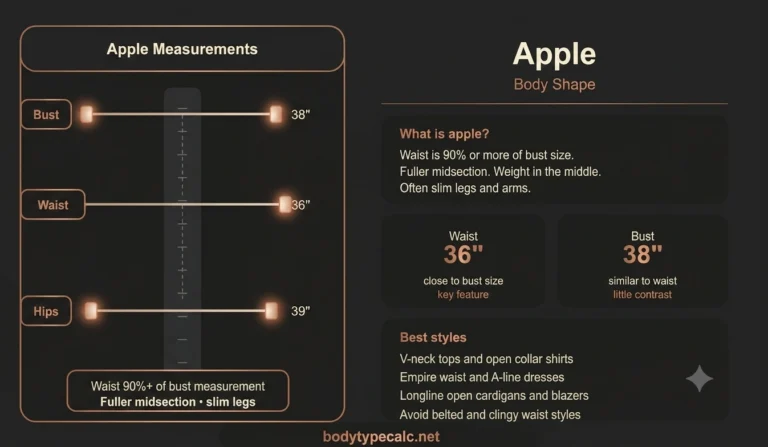
An apple body shape, sometimes called an oval or round shape, means your waist is the largest measurement or sits very close to your bust and hips with little narrowing in between.
Many women with an apple shape also have a fuller bust, broad shoulders, and slimmer hips and legs, though that’s a common tendency rather than a rule everyone fits. Typical apple measurements include the following:
If your waist-to-hip ratio sits closer to 0.75–0.80, you’re in the border zone between apple and rectangle, which is completely normal. Many women naturally fall between two body shapes, especially when their measurements sit close to the boundary.
At a glance
| Measurement | Typical range |
| Waist-to-hip ratio | Above 0.80 |
| Waist vs bust | About 90% or more |
| Waist vs hips | About 90% or more |
| Waist definition | Minimal |
Types of Apple Body Shape
Not every apple shape looks the same. Most women fall into one of three common variations.
Classic Apple
A classic apple has the waist as the widest area of the body, often paired with a fuller bust and slimmer hips and legs, with very little waist definition.
Soft Apple
A soft apple keeps waist and hips close in size, creating a softer, more rounded overall silhouette rather than a sharply larger waist specifically.
Athletic Apple
An athletic apple carries a stronger shoulder line with a straighter waist and a generally athletic build; balance here comes more from shoulder and leg presence than from any waist suggestion.
Apple shapes are estimated to make up around one in seven women. Genetics, hormones, age, and lifestyle can all influence these proportions over time.
Check Your Apple Body Shape Proportions
Enter your bust, waist, and hip measurements to see whether your proportions match an apple body shape.
How to Measure for an Apple Body Shape
Apple waists often have less obvious definition than other shapes, so measuring carefully matters more here.
Bust
The fullest part, tape kept level all the way around.
Waist
The narrowest point, or about an inch above the belly button if it isn’t clearly defined.
Hips
The fullest part of your hips and seat, feet together.
Measure twice for the most accurate result, especially if your numbers seem to sit close to both apple and rectangle.
Apple Body Shape vs Other Body Shapes
Comparing an apple shape with other body shapes makes it easier to understand your natural proportions and identify your figure more accurately.
Focus on Balance, Not Camouflage
Most style advice tells apple shapes to hide the midsection. A better approach is balance instead.
Apple shapes often have slim legs, a fuller bust, and strong shoulders. Highlighting those features tends to create a more balanced, put-together look than simply trying to cover something up.
Why Waistbands Never Seem to Sit Right
Many jeans and trousers place the waistband at the fullest part of the waist, making them feel tight or uncomfortable.
High-rise waistbands usually work better because they sit above the fullest part of the midsection. Stretch fabrics and pull-on styles can also provide a more comfortable, flexible fit.
What to Wear for an Apple Body Shape
The goal is a balanced silhouette, drawing attention upward and adding a little definition around the waist rather than trying to compress it. Choosing the right clothing size also helps create a better fit, so use our Dress Size Calculator to find the size that matches your measurements.
Tops
V-neck tops lengthen the neckline and draw the eye up. Wrap tops create a natural waist suggestion without gripping the midsection. Empire waist tops sit under the bust, above the fuller area, which is one of the most reliable silhouettes for this shape. Flowing blouses move with the body instead of outlining every change in it.
Dresses
Wrap dresses do the most work in a single piece: a V neckline, a waist cue, and a skirt that opens cleanly. A-line and empire waist dresses also work well, especially when the waistline sits at or slightly above the natural waist.
Bottoms and jeans
High-rise jeans are the most reliable choice, since the waistband sits above the fullest point. Straight-leg and bootcut jeans keep a clean line below it, and A-line skirts do something similar in skirt form.
Outerwear
Long coats and open-front cardigans build a vertical line instead of depending on a tight waist. Tailored blazers and wrap coats add shape without needing to cinch anything.
By occasion
For work, a wrap blouse with high-rise trousers reads polished without effort. For something casual, a V-neck tee with straight-leg jeans is an easy everyday combination. For formal occasions, a wrap dress or an A-line gown with a defined waist both flatter this shape well. For more ideas, see our Apple Body Shape Outfits guide.
Five Ways to Create a Visual Waist
You don’t need tight clothing to create the appearance of a more defined waist.
Waist-to-Hip Ratio and Health
The waist-to-hip ratio (WHR) is calculated by dividing your waist measurement by your hip measurement. Many women with an apple shape have a waist-to-hip ratio above 0.80.
WHR is useful for understanding body proportions, but it doesn’t define your body shape on its own. If you’re concerned about your health, waist circumference, physical activity, and guidance from a healthcare professional are more important than body shape alone.
Frequently Asked Questions
Conclusion
An apple body shape is defined by a fuller midsection, not your weight or clothing size. Understanding your measurements helps you choose clothes that fit comfortably and flatter your natural proportions.
Instead of trying to hide your shape, focus on creating balance, highlighting your natural features, and choosing styles that make you feel comfortable and confident.