
Pear vs Apple Body Type | Key Differences & How to Tell
Apple and pear are two of the most talked-about body shapes, and they sit at opposite ends of where the body tends to carry more weight. Apple shapes tend to carry more fullness around the midsection, while pear shapes carry more through the hips and thighs. This guide explains how to tell the two apart, what the research says about health, and how their styling approaches differ.
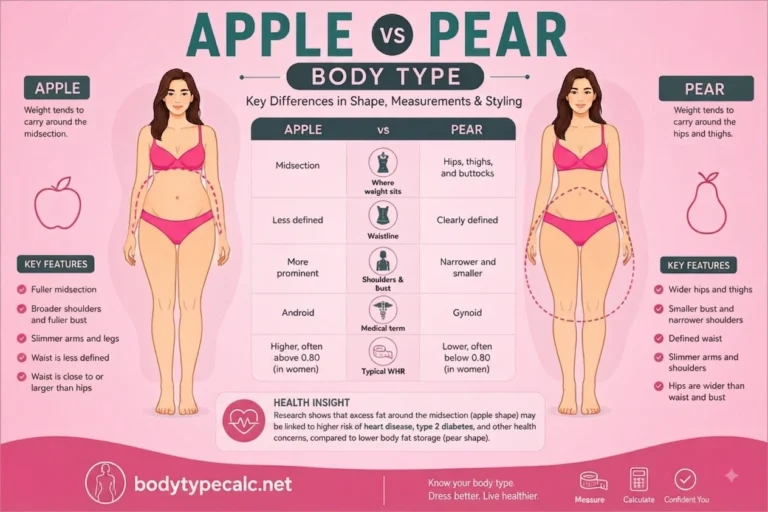
What Is an Apple Body Shape?
An apple shape carries most of its weight around the midsection rather than the hips or legs. Here’s what typically defines it.
Key Features
A rounder, fuller midsection with a less defined waist, broader shoulders, and a fuller bust. The arms and legs are often comparatively slimmer. In medical terms, this pattern is known as android fat distribution.
Waist-to-Hip Pattern
Apple shapes tend to have a waist measurement that is closer to or larger than the hip measurement, resulting in a higher waist-to-hip ratio than pear shapes typically have.
What Is a Pear Body Shape?
A pear shape carries more weight through the lower body, with a smaller upper body by comparison. Here’s what typically defines it.
Key Features
A smaller bust and narrower shoulders relative to the hips, a defined waist, and wider hips and thighs, with proportionately slimmer arms and shoulders. In medical terms, this pattern is known as gynoid fat distribution.
Waist-to-Hip Pattern
Pear shapes typically have hips that are noticeably wider than the waist, resulting in a lower waist-to-hip ratio than apple shapes generally show.
Apple vs Pear: Key Differences
| Comparison | Apple | Pear |
| Where weight sits | Midsection | Hips, thighs, and buttocks |
| Waistline | Less defined | Clearly defined |
| Shoulders and bust | More prominent | Narrower and smaller |
| Arms and legs | Leaner | Proportionately slim |
| Medical term | Android | Gynoid |
| Typical WHR | Higher, often above 0.80 in women | Lower, often below 0.80 in women |
How to Tell If You’re Apple or Pear
Figuring out which shape you are mostly comes down to noticing where your body naturally carries more weight. Here’s how to check.
Look at Where You Carry Weight
If weight tends to show up first around your stomach and midsection, with a less defined waistline, that points toward apple. If it shows up more around your hips and thighs, with a clearly narrower waist, that points toward pear.
Compare Bust, Waist, and Hips
Apple shapes usually have a waist measurement that’s close to or larger than the hip measurement. Pear shapes usually have hips that are clearly larger than both the waist and bust. A waist-to-hip ratio calculator can help confirm which pattern your own measurements fall into.
Does Body Shape Actually Affect Health?
The apple versus pear comparison comes up often in health discussions, and there is research behind it, although there are important limitations to keep in mind.
What the Research Shows
Several studies have linked apple, or android, fat distribution with higher health risks compared with pear, or gynoid, fat distribution. One review of 72 studies found that greater fat storage around the stomach was associated with a significantly higher risk of death from any cause compared with pear-shaped fat distribution.
Another study of postmenopausal women found that those with an apple pattern were about three times more likely to develop heart disease, while pear-shaped fat distribution appeared to reduce heart disease risk by up to 40%.
Why the Midsection Matters More
Research has also linked apple-shaped fat distribution with a higher risk of heart disease and type 2 diabetes independent of BMI. One broad review found that every 3.9-inch increase in waist circumference was associated with roughly a 3% to 4% increase in heart disease risk. Central fat, which is more common in apple-shaped patterns, has also been associated with kidney disease, certain cancers, and cognitive decline in various studies.
Why This Shouldn’t Be the Whole Picture
Most of this research is observational, so it shows an association rather than proving that body shape directly causes these health outcomes. Genetics, hormones, age, and natural fat distribution all influence where someone carries fat. Someone with more midsection fat can still be in excellent health, while having a pear-shaped body does not automatically provide protection.
Body shape is therefore only one piece of the picture. Diet, physical activity, sleep, and overall lifestyle also play important roles in health.
Better Ways to Check Body Composition
Waist circumference above 35 inches in women or 40 inches in men is generally used as a marker of higher abdominal fat and associated health risk. A waist-to-hip ratio above roughly 0.80 in women or 0.95 in men can indicate a similar pattern.
Body fat percentage and standard lab tests can provide additional information, but no single measurement should be used on its own to judge someone’s overall health.
Styling the Apple Body Shape
The general goal for apple shapes is to create length, draw attention away from the midsection, and highlight other features. Here’s what tends to work.
What to Wear
V-neck and scoop-neck tops draw attention toward the chest and face rather than the waist. Vertical lines through seams, stripes, or draping can create a lengthening effect. Structured pieces, such as tailored blazers or dresses with a built-in waist, add shape without clinging to the midsection.
Layering can also add visual interest while keeping the waist area skimmed rather than emphasized. Try a flowy top over a fitted tank or a structured jacket over a dress.
What to Avoid
Clingy fabrics that hug the midsection can emphasize the area, as can patterns or embellishments placed directly around the waist. Very high, narrow necklines may make the shoulders appear narrower, so lower or wider necklines can create better balance. Very fitted sleeves without any added structure or volume may also do little to balance the upper body.
Styling the Pear Body Shape
The general goal for pear shapes is to balance a fuller lower body by adding interest up top while defining the waist. Here’s what tends to work.
What to Wear
Eye-catching details such as ruffles, embellishments, or bold prints on tops help draw attention upward. Tops and dresses that define the waist, along with a simple belt, can create a more balanced silhouette.
A-line skirts that gently flare from the waist skim over wider hips without adding unnecessary bulk. Darker, streamlined pieces on the lower body can also keep the bottom half visually quieter.
What to Avoid
Very tight bottoms, such as skinny jeans or fitted skirts, can emphasize hip and thigh width. Low-rise pants may shorten the leg line and draw more attention to the hips, so high-waist styles often work better.
Boxy tops that hide the waist can work against the shape’s natural waist definition, while heavy or bulky fabrics on the lower body can add extra visual volume where it’s not needed.
Universal Style Tips for Both Shapes
A few style principles work well regardless of which shape you’re dressing for. Here’s what applies across the board.
Fit Matters More Than Trends
Well-fitting clothing consistently looks better than an ill-fitting trendy piece. Tailoring even a few key items can make a noticeable difference for either shape.
Use Color and Layering Strategically
A bright top can draw attention upward, while a darker bottom can streamline the lower body, a technique that works especially well for pear shapes. Layering, such as a structured jacket over a flowy dress, can also add visual interest and balance for either shape.
Invest in the Basics
A well-fitting, supportive bra can change how nearly every top and dress fits and sits. It’s one of the simplest wardrobe upgrades for either body type.
Frequently Asked Questions
Conclusion
Apple and pear describe two different patterns of where the body tends to carry more weight, and each has its own general styling approach. Apple shapes typically benefit from drawing attention away from the midsection, while pear shapes focus on balancing a fuller lower body.
The health research behind these patterns is meaningful, but it’s only one part of a much bigger picture that includes genetics, lifestyle, and overall habits. Body shape alone should never be treated as a verdict on someone’s health.
Not sure which shape best describes you? Confirm your proportions with a body shape calculator using your bust, waist, and hip measurements, and check your waist-to-hip ratio for additional context.