Figure Calculator: Identify Your Figure Shape by Bust, Waist & Hip
A figure calculator uses your bust, waist, and hip measurements to identify your body figure type. Instead of guessing, it compares your body proportions to estimate whether your figure is hourglass, pear, rectangle, apple, inverted triangle, or another common shape. This guide explains how the calculator works, how to take accurate measurements, and what your figure type means.
What Is My Figure?
Enter your measurements to find your body figure type instantly.
What Is a Figure Calculator?
A figure calculator uses your body measurements to estimate your figure type and help you understand your natural body proportions.
What a figure calculator is
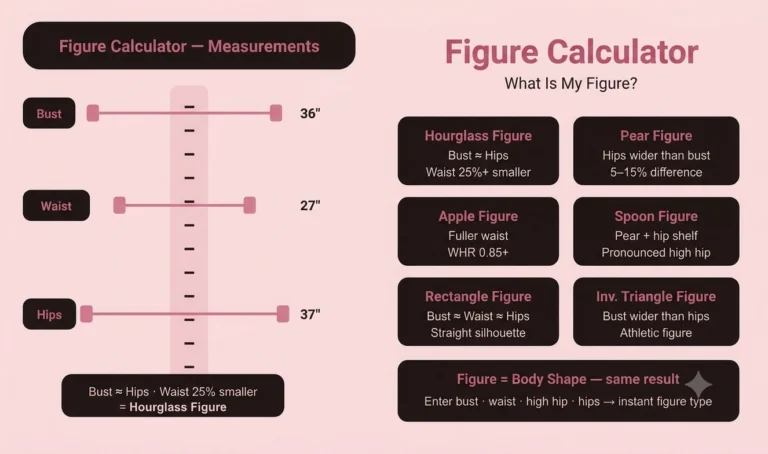
A figure calculator compares your bust, waist, high hip, and hip measurements to identify your body figure type. It’s another name for a body shape calculator, using the same measurements and comparison method.
How it works
YYou enter your measurements, and the calculator compares them to determine your body proportions. A much smaller waist compared to the bust and hips points one way, while a waist close in size to the rest points another.
Who should use it?
Anyone interested in understanding their body proportions, choosing better-fitting clothes, or shopping online can use it. It works for both women and men.
Why body proportions matter
Your figure type is determined by how your bust, waist, and hips compare with one another. Individual measurements matter, but your overall proportions are what define your figure.
How to Use the Figure Calculator
Using the figure calculator takes just a minute. Enter your measurements to identify your body figure.
Enter your measurements
Enter your bust, waist, and hip measurements. Add your high hip and shoulder measurements for a more accurate result.
Select inches or centimeters
Choose inches or centimeters, and use the same unit for every measurement.
Get your body figure result
The calculator compares your measurements and identifies the figure type that best matches your proportions.
Understand your result
You’ll also see how your body proportions compare, making it easier to understand your result.
What Measurements Do You Need?
Accurate measurements are essential for identifying your body figure correctly.
Bust Measurement
Taken around the fullest part of your chest. This is one of the three core numbers for figure type.
Waist Measurement
Taken at the narrowest point of your torso, usually just above the belly button.
High Hip Measurement
Taken a few inches below the waist, above the fullest hip point. It helps distinguish similar figure types, such as pear and spoon.
Hip Measurement
Taken around the widest part of your hips and seat.
Shoulder Measurement (Optional)
Measure across your back from one shoulder tip to the other. This helps identify figure types with broader shoulders than hips, such as the inverted triangle.
How to Measure Your Body Correctly
Accurate measurements are essential for identifying your body figure correctly.
How to Measure Your Bust
Stand naturally and measure around the fullest part of your bust, keeping the tape level all the way around.
How to Measure Your Waist
Measure around the narrowest part of your waist, breathe normally, and avoid pulling your stomach in.
How to Measure Your High Hips
Measure about three to four inches below your natural waist, above the fullest hip point.
How to Measure Your Hips
Measure around the fullest part of your hips and seat with your feet together and the tape level.
How to Measure Your Shoulders
Measure across your back from one shoulder tip to the other, keeping the tape straight and level.
How the Figure Calculator Determines Your Body Shape
The calculator compares your body measurements to identify your figure type. It evaluates your overall proportions rather than relying on a single measurement.
Measurement comparison
The calculator compares your bust, waist, and hip measurements to see how they relate to one another. These proportions determine your figure type.
Waist-to-hip relationship
A noticeably smaller waist often indicates an hourglass or pear figure, while a waist closer in size to the hips may indicate a rectangle or apple figure.
Shoulder-to-hip balance
Broader shoulders compared with the hips usually indicate an inverted triangle figure.
Why no single measurement determines your figure
A single measurement can’t determine your figure. Your bust, waist, hips, and shoulders must all be compared to identify your body proportions accurately.
Types of Body Figures
Your body figure is determined by the relationship between your bust, waist, hips, and shoulders. Below are the most common body figure types.
Rectangle
The bust, waist, and hips are similar in measurement, creating a straighter body shape.
Key characteristics: a straight silhouette with minimal waist definition.
Typical proportions: little difference between bust, waist, and hip numbers.
Best clothing styles: belted pieces or styles that create the illusion of a waist.
Apple
The waist is similar to or larger than the bust and hips, with more fullness around the midsection.
Key characteristics: a fuller midsection compared to the upper and lower body.
Typical proportions: waist at 90 percent or more of bust and hip measurements.
Best clothing styles: empire waistlines that fall just under the bust.
Oval
Similar to an apple shape, but with a softer, rounder midsection and minimal waist definition.
Key characteristics: soft, rounded midsection with less contrast between measurements.
Typical proportions: similar to apple, with a gradual rather than sharp waistline.
Best clothing styles: flowing fabrics that skim rather than cling.
Figure Calculator vs Body Shape Calculator
| Figure Calculator | Body Shape Calculator |
| Uses body measurements | Uses body measurements |
| Identifies body figure | Identifies body shape |
| Terms are often used interchangeably | Focuses on body shape categories |
Both calculators use the same body measurements and provide similar results. “Figure” and “body shape” are often used interchangeably.
Figure Calculator vs Body Type Calculator
A figure calculator and a body type calculator focus on different aspects of your body.
Are they the same?
No. A figure calculator compares measurements such as your bust, waist, and hips to identify your figure. A body type calculator may also consider height, weight, body fat, or frame size.
Key differences
Figure calculators focus on body proportions and shape, while body type calculators often include overall build and body composition.
Which one should you use?
Use a figure calculator to understand your body shape for clothing and styling. Use a body type calculator if you also want information about your overall build or body composition.
Why Knowing Your Body Figure Matters
Understanding your body figure helps you choose clothing that fits well and complements your natural proportions.
Better clothing fit
Knowing your figure type makes it easier to choose clothing styles that suit your body proportions.
Easier online shopping
Understanding your figure helps you make better choices when shopping online, where trying clothes on isn’t possible.
More confident styling
Knowing your figure makes it easier to create outfits that suit your shape with confidence.
Tailoring
Knowing your body proportions helps a tailor achieve a more accurate and comfortable fit.
Wardrobe planning
Understanding your figure helps you build a wardrobe filled with styles that fit well and suit your shape.
Common Measurement Mistakes
Tips for Accurate Results
Frequently Asked Questions
Conclusion
A figure calculator uses your body measurements to identify your figure type and help you understand your natural proportions. Knowing your figure type makes it easier to choose clothes, shop with confidence, and find styles that suit your body shape. Take accurate measurements, update them when your body changes, and use your results as a guide for choosing clothes that fit and flatter your shape.