
Hourglass vs Pear Body Type: Key Differences & Measurements
Both shapes can have a defined waist, and both can have hips that are wider than the bust. If you’ve measured yourself and still can’t tell which one you have, you’re not alone. Hourglass vs pear is one of the most commonly confused body shape comparisons.
The main difference comes down to how closely your bust and hip measurements compare with each other. This guide explains the key measurement difference, a simple way to compare the two shapes, and how their styling approaches differ.
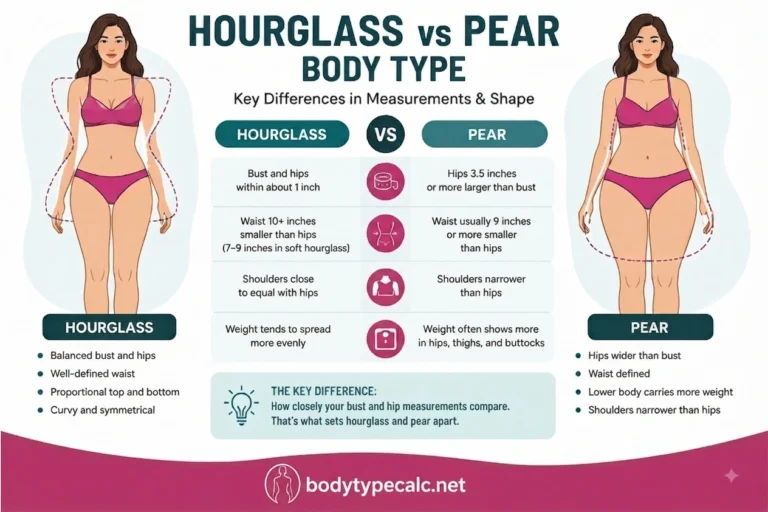
The One Number That Actually Separates Them
Waist-to-hip ratio is often the first number people look at, but it isn’t the most useful measurement for telling an hourglass from a pear shape. The key is how closely your bust and hip measurements compare.
It’s Not Waist-to-Hip Ratio
Both hourglass and pear shapes can have a similar WHR, often somewhere around 0.65 to 0.80. Because of that overlap, WHR alone can’t reliably distinguish between the two.
The Real Separator Is Bust-to-Hip Symmetry
The more useful comparison is the difference between your bust and hip measurements. An hourglass shape is generally balanced, with bust and hips usually within about 1 inch of each other. A pear shape has noticeably wider hips, typically around 3.5 inches or more larger than the bust.
Why Waist Definition Can Be Confusing
Both shapes can have a clearly defined waist. A smaller waist tells you that the middle is more defined, but it doesn’t show whether your upper and lower body are balanced.
The main distinction is overall symmetry: an hourglass has relatively balanced bust and hips, while a pear shape has noticeably more volume through the lower body.
Hourglass Body Type: Definition and Measurements
A classic hourglass shape comes down to two main features: balanced bust and hips and a clearly defined waist.
The Core Measurements
For a classic hourglass, the bust and hips are usually within about 1 inch of each other. The difference between the hips and waist is typically 10 inches or more, while a softer hourglass may have a waist-to-hip difference of around 7 to 9 inches.
What It Looks Like
The upper and lower body have roughly similar visual weight, with the waist forming the narrowest point. From the side, the body often creates a noticeable S-shaped curve.
Clothing fit can also reveal these proportions. Separates may require different sizes for the top and bottom, while dresses that fit the bust and hips can sometimes feel slightly loose around the waist.
How Common Is It?
Strict definitions of the classic hourglass shape are relatively uncommon. Some estimates place it at around 8% of women, although the exact figure depends on how the shape is defined and measured. Many people who don’t meet the strict definition may still fall into related categories such as soft hourglass or bottom hourglass.
Pear Body Type: Definition and Measurements
A pear shape can also have a defined waist and noticeable curves, but the lower body is more prominent than the upper body. The main difference from an hourglass is the relationship between the bust and hips.
The Core Measurements
For a pear shape, the hips are typically around 3.5 inches or more larger than the bust. The waist can still be clearly defined, often with a difference of around 9 inches or more between the hips and waist. This combination is why pear and hourglass shapes can sometimes look similar.
What It Looks Like
The lower body usually carries more visual weight, with the hips and thighs appearing wider relative to the shoulders and bust. Clothing fit can be more challenging around the lower body, since jeans, trousers, and skirts may fit the hips while leaving extra room around the waist.
How Common Is It?
Pear is generally considered one of the more common body shape patterns. Some style-industry estimates place it at around 20% to 25% of women, although the exact percentage varies depending on how body shapes are defined and measured.
Hourglass vs Pear: Side-by-Side Comparison
| Comparison | Hourglass | Pear |
| Bust-to-hip gap | Within about 1 inch | 3.5 inches or more, hips wider |
| Waist gap | 10+ inches classic, 7 to 9 inches soft | Usually 9 inches or more |
| Shoulders vs hips | Close to equal | Shoulders narrower than hips |
| Visual center | Balanced top and bottom | Lower body leads |
| Weight gain pattern | Tends to spread more evenly | Often more noticeable around hips and thighs |
| Biggest fit issue | Waist gaping in dresses | Waist gaping in bottoms |
| Best dress direction | Fitted wrap, sheath, pencil | A-line and fit-and-flare |
Because both shapes can have a similar WHR, the bust-to-hip difference is the better first check. If your measurements fall somewhere in the middle, the waist gap can help provide additional context.
The 2-Step Method to Tell Which One You Are
Once you have accurate measurements, you can narrow down whether your proportions are closer to hourglass or pear with two simple checks.
Step 1: Measure correctly
You need three measurements: bust, waist, and full hips.
Using the wrong measuring point can change the result by several inches, so consistency matters. For detailed instructions, see our guides on how to measure bust, waist, and hips.
Step 2: Compare bust and hips
Subtract your bust measurement from your hip measurement.
Worked example: clear hourglass
Bust 37 in, waist 27 in, hips 38 in Hips minus bust: 1 inch Hips minus waist: 11 inches Result: classic hourglass
Worked example: clear pear
Bust 34 in, waist 27 in, hips 40 in Hips minus bust: 6 inches Hips minus waist: 13 inches Result: classic pear
Worked example: gray zone
Bust 35 in, waist 28 in, hips 38 in Hips minus bust: 3 inches Hips minus waist: 10 inches Result: leans soft or bottom hourglass, worth confirming with a body shape calculator.
Styling Differences Between Hourglass and Pear
Both shapes can benefit from waist definition and high-waist styles, and both can wear wrap dresses well. The biggest styling difference is how you approach the upper and lower body.
Upper Body: Hourglass
Because the upper body already balances the hips, focus on clean, fitted styles rather than adding extra volume. V-neck and scoop-neck tops, fitted knits, and wrap tops that show the waist can work well. Very boxy tops or excessive volume can hide the balanced proportions.
Upper Body: Pear
A pear shape typically has a narrower upper body, so adding some visual interest above the waist can create balance. Try boat necks, off-shoulder tops, structured shoulders, puff sleeves, or brighter colors and prints on top. Very narrow necklines or thin straps may emphasize the difference between the shoulders and hips.
Lower Body: Hourglass
Since the lower body is already balanced with the upper body, there’s usually no need to add or reduce visual volume. Pencil skirts, high-waist straight-leg jeans, and fabrics that follow the waist-to-hip curve can highlight the shape. Very loose cuts may hide the natural proportions.
Lower Body: Pear
For a pear shape, the goal is to create a smooth, balanced line through the hips rather than completely hiding them. A-line skirts, fit-and-flare dresses, straight-leg trousers, wide-leg pants, and bootcut styles can work well. Low-rise bottoms, large hip-level pockets, and bold prints around the widest hip area can draw additional attention there.
Dress and Jeans Recommendations by Shape
The best dress and jeans styles can vary between hourglass and pear shapes. Both can benefit from waist definition, but the ideal cut depends on where you want to add or maintain visual balance.
| Dress Type | Hourglass | Pear |
| Wrap dress | Fitted wrap that follows the natural curve | Wider neckline or structured upper body |
| A-line dress | Works well, but isn’t always the strongest option | One of the best choices for balancing the hips |
| Fit-and-flare | Good when the waist remains visible | Excellent for adding upper-body structure and allowing hip room |
| Pencil dress | Excellent for following balanced curves | Can be more challenging because it emphasizes the hips and thighs |
| Empire waist | Usually less effective because it hides the natural waist | Can work, but avoid placing the waistline too high |
Jeans for Hourglass
High-rise straight-leg or skinny jeans can work well, especially when they have a shaped waistband and some stretch. Choose the size that fits your hips and have the waist adjusted if there’s extra room.
Jeans for Pear
High-rise wide-leg, bootcut, or relaxed straight jeans can balance the hip line while providing enough room through the lower body. Stable denim with some stretch can improve comfort. As with hourglass shapes, choose for the hips first and adjust the waist if necessary.
Why People Often Misidentify Their Shape
A few common measurement mistakes can lead to confusing body shape results. Here’s what to watch for.
Measuring Shoulder Width Instead of Bust
Bust measurement is the circumference around the fullest part of your chest, not the straight distance from one shoulder to the other. Using shoulder width as your bust measurement can make the bust appear smaller and may incorrectly point toward a pear shape.
Measuring the High Hip Instead of the Full Hip
The high hip sits closer to the hip bones and is often 2 to 4 inches narrower than the full hip. Using the high hip instead of the fullest hip measurement can make a pear shape appear closer to a soft hourglass.
Sucking In Your Stomach While Measuring
Holding your stomach in can reduce your waist measurement and exaggerate the difference between your waist and hips. Stand naturally, breathe normally, and avoid pulling your stomach in while taking the measurement.
Trusting the Mirror Over the Numbers
Posture, lighting, clothing, and camera angles can all change how your proportions appear. Accurate, consistent measurements provide a more reliable comparison than judging your shape from a quick mirror check.
Frequently Asked Questions
Conclusion
Hourglass and pear shapes can look surprisingly similar because both may have a clearly defined waist. The key difference is the gap between bust and hips, rather than waist-to-hip ratio alone.
Measure your bust, waist, and full hips carefully, then use the two-step comparison above. If your measurements fall into the gray zone, a body shape calculator can provide a more specific result. Once you know your shape, you can explore an hourglass outfit guide or pear outfit guide for styling ideas that suit your proportions.