Spoon vs Pear Body Type | Key Differences & How to Tell
Spoon and pear body shapes are easy to confuse because both have hips that are wider than the bust and usually a defined waist. The main difference is the high-hip area. Spoon shapes tend to have a more noticeable curve just below the waist, while pear shapes usually widen more gradually toward the hips. This guide explains how to tell them apart, which measurements matter, and how styling can differ between the two.
Understanding Spoon and Pear Body Shapes
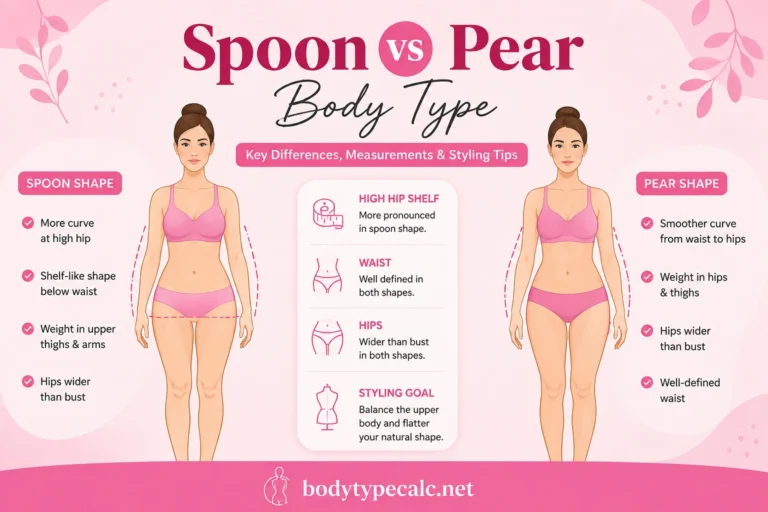
Spoon and pear shapes share the same general pattern, with hips that are wider than the bust and shoulders. The main difference is how the hips curve from the waist to the widest point.
The Key Difference: The High Hip Shelf
The high hip is the main feature that helps distinguish a spoon shape from a pear shape. It sits between the natural waist and the fullest part of the hips.
What the High Hip Shelf Means
The high hip is usually about 3 to 4 inches below the natural waist, above the widest part of the hips. On a spoon shape, this area curves outward more noticeably, creating a shelf-like appearance. On a pear shape, the transition from the waist to the hips is generally smoother and more gradual.
How to Measure for It
Take three numbers: natural waist, high hip (three to four inches below the waist), and full hip (the widest point, usually seven to nine inches below the waist). If your high hip measurement is 15% or more wider than your waist, and noticeably closer to your full hip number than expected at that height, you’re likely looking at spoon rather than standard pear. For the full walkthrough, see how to measure your waist and hips.
Spoon vs Pear: Key Differences
| Feature | Spoon | Pear |
| Hip appearance | Shelf-like curve at the high hip | Smoother, more gradual curve |
| Waist definition | Defined, sometimes shorter | Well defined |
| Weight distribution | Upper thighs and arms, plus hip shelf | Thighs and hips overall |
| Shoulders and bust | Narrower relative to hips | Smaller, narrower relative to hips |
| High hip vs waist gap | 15% or more | Less pronounced |
Common Misconceptions About Spoon and Pear
Spoon and pear shapes are often confused because they share similar lower-body proportions. Here are a few common misconceptions to clear up.
Myth: Spoon and Pear Are the Same Shape
Both shapes have hips that are wider than the bust, but the high-hip curve helps distinguish them. Spoon shapes tend to have a more noticeable shelf-like curve below the waist, while pear shapes usually have a smoother transition into the hips.
Myth: Only Certain Clothes Work for These Shapes
Neither shape limits your wardrobe. The goal is simply to choose cuts, fabrics, and proportions that work comfortably with your natural shape rather than trying to hide it.
Myth: These Shapes Limit Your Fashion Options
They don’t. A-line dresses, layered tops, wide-leg pants, and many current trends can work well for both shapes. The main styling idea is to balance the upper body while allowing the lower body to follow its natural curves.
Styling Tips for Spoon Body Shape
Since the high-hip curve is the defining feature, the main styling goal is to balance the upper body while keeping the lower half smooth and streamlined.
Emphasize the Shoulders and Arms
Structured shoulders, statement sleeves, and detailed tops can add visual width up top and balance the wider hip area.
Highlight the Neckline
V-neck and scoop-neck tops draw attention upward and create a longer-looking neckline, helping shift focus away from the hips.
Use Color Strategically
Brighter colors and patterns on top can draw attention to the upper body, while darker shades on the bottom create a more streamlined look around the hips.
Choose the Right Bottoms
Straight-leg or slightly flared pants and skirts that skim over the hips tend to work well. Very tight bottoms can cling to the high-hip area and make the shelf curve more noticeable.
Styling Tips for Pear Body Shape
Since pear shapes have a smoother transition from the waist to the hips, the styling approach is similar to spoon shapes but gives you a little more flexibility with lower-body styles.
Accentuate the Upper Body
Bright colors, bold patterns, and interesting details on tops draw attention upward and help balance wider hips.
Highlight the Waist
Belts and waist-defined styles emphasize the natural waist and create a more polished, balanced silhouette.
Choose A-Line Skirts
A-line skirts flare gently from the waist, flowing over the hips without adding unnecessary bulk.
Pick the Right Pants
Straight-leg and bootcut pants create a longer, balanced leg line and work well with wider hips. Pear shapes also have a little more flexibility with fitted fabrics than spoon shapes.
Fashion Trends That Work for Both Shapes
Some styles work especially well for both spoon and pear shapes because they define the waist while keeping the overall silhouette balanced.
A-Line Dresses
A-line dresses define the waist and flare gently over the hips, making them a versatile choice for both the smoother pear curve and the more pronounced spoon high-hip curve.
Layered Tops
Layering adds visual interest to the upper body and can help balance wider hips on either shape.
Statement Accessories
Bold necklaces, earrings, and other eye-catching accessories draw attention toward the face and upper body, creating a more balanced overall look.
Frequently Asked Questions
Conclusion
Spoon and pear body shapes share similar proportions, but the high-hip curve is the key detail that helps tell them apart. Measuring your waist, high hip, and full hip can give you a clearer idea of which pattern fits your proportions.
Once you know your shape, focus on styles that work with it. Spoon shapes can benefit from structured tops and smoother bottoms, while pear shapes can use brighter upper-body details, waist definition, and A-line styles to create balance.
Not sure which shape matches your measurements? Use a body shape calculator to check your proportions, then explore our Spoon Body Shape Outfits or Pear Body Shape Outfits guides for more styling ideas.