Rectangle vs Hourglass Body Type | Key Differences & How to Tell
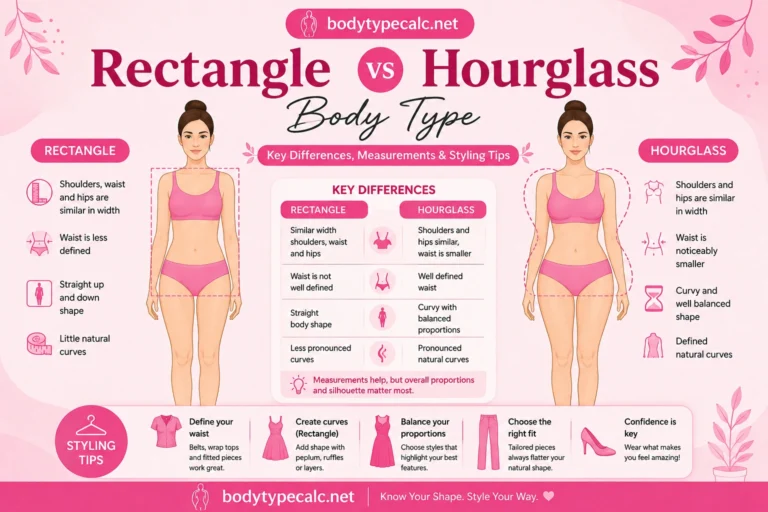
The rectangle and hourglass body types have very different proportions. An hourglass shape has a clearly defined waist with bust and hips that are relatively balanced, while a rectangle shape has bust, waist, and hips that are closer in measurement with less waist definition. This guide explains the key differences, how measurements can help identify each shape, and how their styling approaches compare.
What Is an Hourglass Body Shape?
The hourglass shape is defined by a noticeably smaller waist between a balanced bust and hip line. The overall silhouette is naturally curved, with the waist creating the strongest contrast.
Key Features
The bust and hips are usually similar in measurement, while the waist is clearly narrower. This creates the balanced, curved appearance that is commonly associated with the hourglass shape.
Measurement Pattern
A waist that is at least 25% smaller than the bust and hips is a common measurement guideline for an hourglass shape. The bust and hips should also remain relatively close in size, with the defined waist creating the main difference.
What Is a Rectangle Body Shape?
The rectangle shape has a straighter silhouette, with the bust, waist, and hips staying relatively close in measurement. Unlike an hourglass, there is less contrast between the waist and the other measurements.
Key Features
The shoulders, bust, waist, and hips are generally similar in width, creating a balanced shape with fewer pronounced curves. The waist may still be defined, but the difference is usually more subtle than with an hourglass shape.
Measurement Pattern
Bust, waist, and hip measurements tend to be relatively close together, without a significant narrowing at the waist. This creates a straighter silhouette and contrasts with the strong waist definition of an hourglass shape.
Rectangle vs Hourglass: Key Differences
| Comparison | Hourglass | Rectangle |
| Waist definition | Strong, at least 25% smaller than bust and hips | Minimal to none |
| Bust vs hips | Nearly equal | Nearly equal |
| Overall silhouette | Curved, balanced | Straight, athletic |
| Natural curves | Present throughout | Created mainly through clothing |
| Styling goal | Highlight existing curves | Build the illusion of curves |
How to Determine Your Body Shape
You can usually narrow down your body shape with a few accurate measurements. The key is measuring each area consistently and then comparing the proportions.
Take Your Measurements
Measure around the fullest part of your bust, the narrowest part of your waist, and the widest part of your hips using a soft tape measure. For additional confirmation, you can also measure across your shoulders from one shoulder point to the other.
Compare the Numbers
If your waist is at least 25% smaller than your bust and hips, while your bust and hips are relatively close in size, your proportions fit the hourglass pattern. If your bust, waist, and hips are relatively close in measurement with little waist contrast, they fit the rectangle pattern.
For a quicker result, you can also use a body shape calculator to compare your measurements automatically.
Styling the Hourglass Body Shape
Hourglass proportions are already naturally balanced, so the main styling goal is to highlight the waist and follow the body’s existing curves.
What to Wear
Belts and waist-defined styles help emphasize the natural waist, while wrap dresses and belted tops are easy options. Fitted tops, tailored pieces, and high-waist skirts also work well because they follow the body’s shape without adding unnecessary bulk. Since the bust and hips are already balanced, keeping the overall look proportionate helps maintain that natural symmetry.
What to Avoid
Very boxy or shapeless clothing can hide the waist and make the silhouette look less defined. It’s also better to avoid adding a lot of volume only to the upper or lower body, as this can disrupt the natural balance between the bust and hips.
Styling the Rectangle Body Shape
Rectangle proportions have less natural waist contrast, so the main styling goal is to add definition and create the appearance of curves through clothing.
What to Wear
Belts and high-waist bottoms are simple ways to create more visible waist definition. Ruffled or embellished tops, peplum styles, and A-line skirts can add volume around the bust or hips, helping create a more curved silhouette. Layering also works well, such as pairing a fitted blazer with a defined waist to add structure and dimension.
What to Avoid
Very straight, unstructured clothing with no waist definition can make the silhouette appear even straighter. However, if you prefer a clean, minimalist look, straight-cut clothing can work naturally with rectangle proportions. The best choice depends on whether you want to emphasize curves or keep the streamlined shape.
Common Questions About Rectangle and Hourglass Shapes
These are some of the most common questions when comparing rectangle and hourglass proportions.
Can a Rectangle Body Shape Have a Defined Waist?
Yes. Styling can create the appearance of a more defined waist even when the natural measurements have less contrast. Belts, high-waist clothing, and strategic layering can all help emphasize the waistline.
Do Rectangle Body Shapes Have Curves?
Rectangle shapes generally have fewer pronounced natural curves, but clothing can create the appearance of more curves. Ruffled or detailed tops, A-line skirts, and other volume-adding styles can add shape while keeping the underlying proportions unchanged.
Can a Rectangle Shape Become Hourglass Through Fashion?
No. Clothing cannot physically change your body shape or measurements. However, styling can create the visual impression of an hourglass silhouette by defining the waist and adding volume around the bust and hips.
Dressing Arms and Legs for Each Shape
Body shape advice often focuses on the torso, but the arms and legs also play a part in the overall look. Here are some simple ways to dress them for each shape.
Hourglass Arms and Legs
Sleeveless tops and dresses can highlight the arms, while skirts that sit just above the knee and maxi dresses can complement the naturally balanced proportions. The goal is to work with the existing shape rather than add unnecessary volume.
Rectangle Arms and Legs
Bell sleeves and ruffled details can add extra volume around the arms and create more visual interest. A-line skirts and wide-leg pants add shape around the hips and legs, supporting the overall goal of creating more definition.
General Tips for Both
Sleeveless and short-sleeve tops are easy choices for showing the arms, while three-quarter sleeves offer more coverage. High-waist bottoms with heels can create a longer leg line, while midi skirts and straight-leg pants provide more coverage without adding unnecessary bulk.
How Weight Gain Affects Each Shape
Weight changes can affect each body shape differently, depending on where the body naturally tends to store fat. Hourglass shapes may gain weight across the bust, waist, and hips relatively evenly, which can soften the waist definition while keeping the overall proportions fairly balanced. Rectangle shapes may also gain weight more evenly across the body, so the straighter silhouette often remains relatively consistent as weight changes.
Frequently Asked Questions
Conclusion
Hourglass and rectangle shapes differ mainly in how much waist definition they naturally have. Hourglass proportions emphasize a narrower waist with balanced bust and hips, while rectangle proportions have less contrast between the waist, bust, and hips.
Styling can work with either shape. Hourglass figures can highlight their natural curves, while rectangle figures can create more waist definition through belts, high-waist styles, volume, and layering.
Not sure which shape fits your measurements? Use a body type calculator to compare your bust, waist, and hip measurements, then explore our Hourglass Body Shape Outfits or Rectangle Body Shape Outfits guides for more styling ideas.