Body Shape vs Kibbe | Key Differences & How They Compare
Body shape and Kibbe both help you understand which clothing styles may suit your proportions, but they use very different systems. Body shape focuses mainly on the relationship between your bust, waist, and hips, while Kibbe looks at your overall physical lines, including bone structure, body flesh, and facial features. This guide explains the main differences, why the two systems do not directly match, and when each one can be useful.
What Body Shape Measures
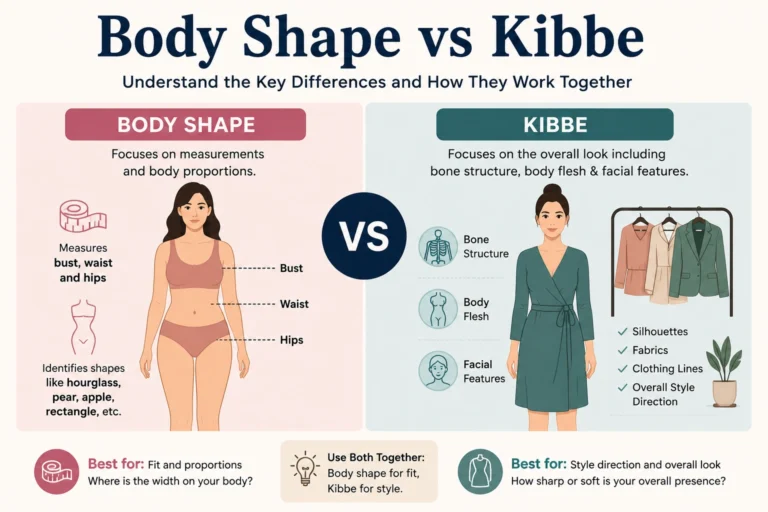
Body shape focuses mainly on the relationship between your bust, waist, and hips. It uses these proportions to identify patterns such as hourglass, pear, apple, rectangle, and inverted triangle.
Because it’s measurement-based, body shape is useful for understanding clothing fit and proportions. It gives you a simple way to compare your measurements and choose styles that work with your natural shape. However, it doesn’t account for factors such as bone structure, height, or facial features.
What the Kibbe System Measures
The Kibbe body type test takes a broader approach. Instead of focusing mainly on measurements, it considers bone structure, body flesh, and facial features to understand your overall visual lines.
Kibbe can help with clothing lines, silhouettes, fabrics, and overall styling direction. Unlike body shape, though, it is more interpretive and doesn’t simply determine whether a particular garment will fit your bust, waist, or hips.
Body Shape vs Kibbe: Key Differences
| Comparison | Body Shape | Kibbe |
| What it measures | Bust, waist, hip ratios | Bone structure, flesh, facial features |
| Core question | Where is the width on your body? | How sharp or soft is your overall presence? |
| Number of categories | Around 7 shapes | 13 types across 5 families |
| Best used for | Fit decisions in the moment | Overall style direction and line |
| Changes with weight | Yes, shifts with body composition | Mostly stable, since bone structure doesn’t change |
| Created by | Long standing fashion industry convention | David Kibbe, 1987 |
Why the Two Systems Don’t Always Line Up
Body shape and Kibbe can give different results because they look at different aspects of your appearance.
There’s No Fixed Mapping
Being an hourglass doesn’t automatically make you a Romantic, just as being a rectangle doesn’t automatically make you Dramatic. People with the same body shape can have very different bone structures, heights, and facial features.
Why This Happens
Body shape focuses on body proportions, especially the relationship between the bust, waist, and hips. Kibbe looks at the overall visual impression, including skeletal structure, flesh, and facial features.
Don’t Force the Two Systems to Match
You don’t need to make your body shape and Kibbe type agree. They are simply answering different styling questions, so it’s normal for the results to be different.
When to Use Body Shape vs Kibbe
Each system is useful for a different purpose.
Use Body Shape When
You want practical help with fit and proportions, such as choosing clothing that works with your waist, bust, and hip measurements.
Use Kibbe When
You want broader guidance on silhouettes, fabrics, clothing lines, and overall style direction.
Use Both Together
You can use body shape for proportion and fit, while Kibbe helps guide lines and overall styling. Using both can give you a more complete picture without requiring one system to replace the other.
Common Misunderstandings
A few myths often come up when comparing body shape with Kibbe. Here’s what to keep in mind.
Myth: Kibbe Is Just a More Detailed Body Shape System
Not exactly. Body shape focuses on proportions, while Kibbe looks at the combined impression of bone structure, body flesh, and facial features. They are measuring different things.
Myth: Your Kibbe Type Should Match Your Body Shape
There is no fixed match between the two. Someone with a rectangle body shape can have different Kibbe characteristics because body proportions and overall physical structure don’t always correspond.
Myth: Kibbe Is About Correcting Body Shape “Flaws”
Traditional body shape styling may focus on creating visual balance or adding the appearance of curves. Kibbe takes a different approach, focusing on clothing that works with your natural lines rather than trying to change them.
Myth: One System Is Better
Neither system is automatically better. Body shape offers quick, measurement-based guidance for proportions and fit, while Kibbe provides broader guidance on lines, silhouettes, and overall style direction.
Frequently Asked Questions
Conclusion
Body shape and Kibbe are not competing systems. They answer different style questions. Body shape focuses on your proportions and can help with fit, while Kibbe looks at your overall lines, structure, and style direction.
Use a body shape calculator to understand your bust, waist, and hip proportions, then take a Kibbe body type test separately if you want a broader view of your natural style lines.