Body Measurement Calculator: Find Your Body Shape & Measurements
A body measurement calculator uses your body measurements to estimate your body shape and provide useful insights about your proportions. Instead of only knowing your waist or hip size, you can see how your measurements compare, understand your body shape, and find clothing that fits more accurately.
Whether you’re choosing the right clothing size, tracking changes over time, or learning more about your natural proportions, accurate measurements make a big difference. Measuring correctly helps ensure reliable results and a better understanding of your body.
Body Measurement Calculator
Enter your measurements to calculate body shape, BMI, ratios, and tape-measure body fat estimate.
What Is a Body Measurement Calculator?
A body measurement calculator uses your measurements to estimate your body shape, clothing size, and overall body proportions.
What it does
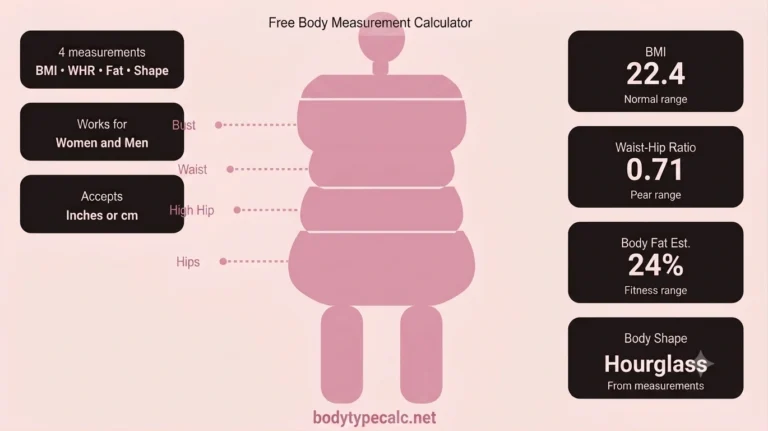
A body measurement calculator uses measurements such as your bust, waist, hips, and shoulders to estimate your body shape, clothing size, and how your proportions compare with standard sizing charts. Simply enter your measurements in inches or centimeters to get instant results.
Why body measurements matter
Your weight alone doesn’t show how your body is proportioned. Two people can weigh the same and have completely different waist, hip, and shoulder numbers. Measurements give a clearer picture of your actual shape, which matters far more for clothing fit and body shape than weight alone.
Who should use it?
Anyone who wants better-fitting clothes, is tracking body changes, or wants to understand their natural body shape can use this calculator. It works for both women and men and doesn’t require any special equipment beyond a soft measuring tape.
Fashion, fitness, and health uses
Stylists use body measurements to recommend flattering outfits. Tailors rely on them for accurate alterations. Many people also track their measurements to monitor fitness progress, even when their weight stays the same.
How to Use the Body Measurement Calculator
Enter your measurements
Start with your waist and hips. For a more accurate result, also enter your bust or chest, shoulders, and high hip measurements.
Select units (inches or cm)
Choose whichever unit you’re comfortable measuring in. Just make sure every measurement you enter uses the same unit.
View your results
After you enter your measurements, the calculator estimates your body shape and calculates related measurements such as your waist-to-hip ratio (WHR).
Understand your measurements
Each result includes a simple explanation to help you understand what it means and how it compares with general reference ranges.
What Body Measurements Do You Need?
Accurate measurements are the key to reliable results. The more complete your measurements are, the more accurate your body shape and size estimate will be.
Bust Measurement
Your bust measurement is taken around the fullest part of your chest. It’s one of the three core numbers used to work out body shape.
Waist Measurement
Your waist is the narrowest point of your torso, usually just above the belly button. It’s used in nearly every body shape and ratio calculation.
High Hip Measurement
The high hip sits a few inches below the waist, above the fullest part of the hips. It helps separate shapes that look similar, like pear and spoon.
Hip Measurement
Your hip measurement is taken at the widest point around your hips and seat. Along with waist and bust, it forms the core of most body shape calculators.
Shoulder Width (Optional)
Shoulder width is measured across the back from one shoulder tip to the other. It’s optional, but it helps identify shapes like the inverted triangle, where the upper body is wider than the hips.
Underbust (Optional)
Underbust is measured directly beneath the bust line. It’s mostly useful for clothing and bra fit rather than general body shape.
Chest Measurement (Men)
For men, the chest measurement replaces the bust measurement and is taken around the fullest part of the upper torso.
How to Measure Your Body Correctly
Accurate measurements are essential for reliable results. Use a soft measuring tape, stand naturally, and measure each area carefully.
How to Measure Bust
Stand naturally and wrap the tape around the fullest part of your bust, keeping it level and parallel to the floor. Avoid heavily padded clothing when measuring.
How to Measure Waist
Find the narrowest part of your torso, usually about an inch above your belly button. Breathe normally and don’t pull your stomach in.
How to Measure High Hips
Measure about three to four inches below your natural waist, above the fullest hip point. This measurement is usually smaller than your full hip measurement.
How to Measure Hips
Wrap the tape around the fullest part of your hips and seat, usually 7–9 inches below your natural waist. Keep your feet together and the tape level.
How to Measure Shoulders
Measure from the outer tip of one shoulder to the outer tip of the other, across your back. Keep the tape straight across your back without following the curve of your neck.
Body Measurement Chart
A body measurement chart helps you compare common bust, waist, hip, chest, and shoulder ranges. For more details, see our Body Measurements Chart.
Women’s Measurement Guide
| Measurement | Typical Range (Inches) |
| Bust | 32 to 40 |
| Waist | 24 to 34 |
| High Hip | 32 to 40 |
| Hip | 34 to 44 |
Men’s Measurement Guide
| Measurement | Typical Range (Inches) |
| Chest | 36 to 46 |
| Waist | 30 to 40 |
| Hip | 36 to 44 |
| Shoulder | 17 to 20 |
Inches to Centimeters Conversion
| Inches | Centimeters |
| 24 | 61 |
| 28 | 71 |
| 32 | 81 |
| 36 | 91 |
| 40 | 102 |
Understanding Your Body Measurements
Your body measurements help you understand your overall body proportions.
What each measurement tells you
Your bust or chest reflects your upper body width. The waist shows your narrowest point. Hips show lower body width. Shoulders show upper frame width. Together, these measurements create a complete picture of your body proportions.
How measurements work together
Your body shape isn’t determined by a single measurement. It comes from comparing all your measurements against each other, like how much smaller your waist is than your hips, or whether your shoulders are wider than your hips.
Why one measurement alone isn’t enough
A 28-inch waist means something different on someone with 34-inch hips than it does on someone with 42-inch hips. That’s why body measurement calculators compare multiple measurements instead of relying on just one.
How Body Measurements Determine Body Shape
Your body shape is determined by how your bust, waist, hips, and shoulders compare with one another. Even small differences in these measurements can change the result. Small differences in these measurements can change the result. You can also check your proportions using a Waist to Hip Ratio Calculator to compare your waist and hip measurements.
Oval
Similar to an apple shape, with a fuller midsection and minimal waist definition.
Body Measurements for Clothing Size
Clothing sizes vary between brands, but your body measurements stay the same. That’s why measurements are more reliable than size labels.
Women’s Clothing
Women’s sizing charts typically use bust, waist, and hip measurements to assign a size number or letter. Although size labels vary by brand, your body measurements remain the same. Use a Dress Size Calculator to compare your measurements with common clothing size ranges and find a better fit.
Men’s Clothing
Men’s clothing sizes are usually based on chest, waist, and sometimes neck measurements, especially for shirts, jackets, and suits.
Why sizes vary between brands
Every brand builds its own size chart, so a size medium at one store can fit completely differently at another. There’s no single universal standard.
Why measurements are more accurate than clothing sizes
Using your actual body measurements provides a much more reliable starting point than relying on clothing size labels alone.
Why Accurate Body Measurements Matter
Better clothing fit
Accurate measurements help you choose better-fitting clothes and reduce the chances of returns or alterations.
Online shopping
When shopping online, your measurements are the most reliable way to choose the right size before you buy.
Tailoring
Tailors rely on accurate measurements to alter clothing properly. Even small measuring errors can affect the final fit.
Fitness progress
Body measurements often reveal progress that a scale can’t, especially when muscle replaces body fat.
Weight loss tracking
Tracking your waist and hip measurements alongside your weight provides a more complete picture of your progress.
Common Body Measurement Mistakes
Tips for Getting Accurate Measurements
Body Measurements vs Clothing Size
| Body Measurements | Clothing Size |
| Based on actual measurements | Based on brand sizing |
| More accurate | Varies by manufacturer |
| Best for tailoring | Best for quick shopping |
How Often Should You Measure Your Body?
Weight loss
Measuring every 2–4 weeks is usually enough to track meaningful changes without focusing on normal day-to-day fluctuations.
Muscle gain
For muscle gain, measuring every 2–4 weeks provides a clearer picture of your progress than checking too often.
Tailoring
Take fresh measurements before any fitting or alteration, since even small body changes can affect how clothing fits.
General tracking
For general tracking, measuring once a month is enough to monitor changes over time.
Frequently Asked Questions
Conclusion
Your body measurements provide a clearer understanding of your body proportions than weight or clothing size alone. Knowing your waist, hips, bust or chest, and shoulder measurements makes it easier to choose the right clothing size, track body changes over time, and understand your body shape with greater confidence. Measure carefully, use the same method each time, and update your measurements every few weeks to keep your results accurate.